You stand by the stove, the cast-iron pan radiating a steady, comforting warmth. A modest cut of flank steak sizzles fiercely, filling your kitchen with the rich, primal scent of browned butter, rendered fat, and caramelized proteins. You plate the meal, slice into the beef, and eagerly take a bite. Instantly, the culinary illusion shatters. You are chewing on a leather boot. The savoury flavour is definitely there, but the texture is a stubborn, unyielding fight against your jaw. We have all experienced this quiet disappointment. You stare at your grocery receipt, wondering if genuinely tender beef is a luxury reserved strictly for those willing to drop forty dollars on a premium ribeye. The frustration is real, especially when you have spent your evening carefully tending to the stove.
The Chemistry of Relaxation
For decades, we have been sold a specific culinary myth. We have been told that tough meat requires aggressive punishment to yield a decent dinner. We drown cheap cuts of beef in harsh vinegars, citrus juices, or terribly expensive bottled chemical marinades that promise instant miracles. We think of tenderizing meat as breaking down a brick wall with a sledgehammer. But muscle fibres are not bricks; they are tightly wound springs. Highly acidic marinades simply cook the surface of the meat prematurely. They turn the exterior a sad, dull grey and leave it mushy, while the interior remains as stubborn as ever. Imagine a tightly clenched fist. Acid just burns the knuckles. What you really need is something to convince the hand to gently open and relax. Enter the simplest, most overlooked box in your baking pantry. A gentle alkaline shift changes everything you know about cooking budget beef.
I first witnessed this quietly brilliant method standing near the back doors of a bustling, family-run eatery in a Toronto strip mall. The evening dinner rush was looming, the air was thick with the scent of roasted garlic, and the head chef was prepping mountains of cheap beef drops for the wok. He did not reach for an expensive papaya enzyme powder or a commercial tenderizing mallet. Instead, he reached for a humble yellow box of baking soda. Velveting, he called it over the roar of the exhaust fans. By briefly altering the pH level of the meat’s surface, the baking soda physically prevents the proteins from bonding tightly together when they hit the 200 Celsius heat of the pan. It is a fifteen-minute restaurant secret that turns a budget cut into a velvet-soft bite, completely defying the tough nature of the muscle.
| The Home Cook | The Tangible Benefit |
|---|---|
| The Grocery Budgeter | Transforms a ten-dollar inside round into a texture rivaling a costly premium cut. |
| The Busy Parent | Saves hours of soaking time. The entire tenderizing process takes just fifteen minutes. |
| The Health Conscious | Eliminates the need for store-bought marinades loaded with refined sugars and high sodium. |
| The Meal Prepper | Keeps beef tender even after being stored in the fridge and reheated, avoiding the dreaded rubber texture. |
| Tenderizing Method | Mechanism of Action | Result on Tough Beef |
|---|---|---|
| Acid (Vinegar/Citrus) | Denatures surface proteins via low pH, effectively ‘cooking’ the outside raw. | Mushy exterior, tough interior. Meat releases moisture rapidly in the pan. |
| Enzymes (Papaya Powder) | Cleaves peptide bonds randomly across the muscle structure. | Can turn meat into an unappealing, chalky paste if left for even a fraction too long. |
| Alkaline (Baking Soda) | Raises pH to roughly 8.0, increasing negative charge on protein filaments. | Proteins repel each other, creating space for water. Meat stays incredibly tender and juicy. |
The Fifteen-Minute Transformation
The actual process of velveting is almost entirely hands-off. It demands only a brief moment of your attention before the intense heat takes over. First, you must slice your steak. Whether you have brought home a flank, skirt, or a cheap chuck roast, always slice it sharply against the grain. This immediate, physical action shortens the long muscle fibres before the chemistry even begins.
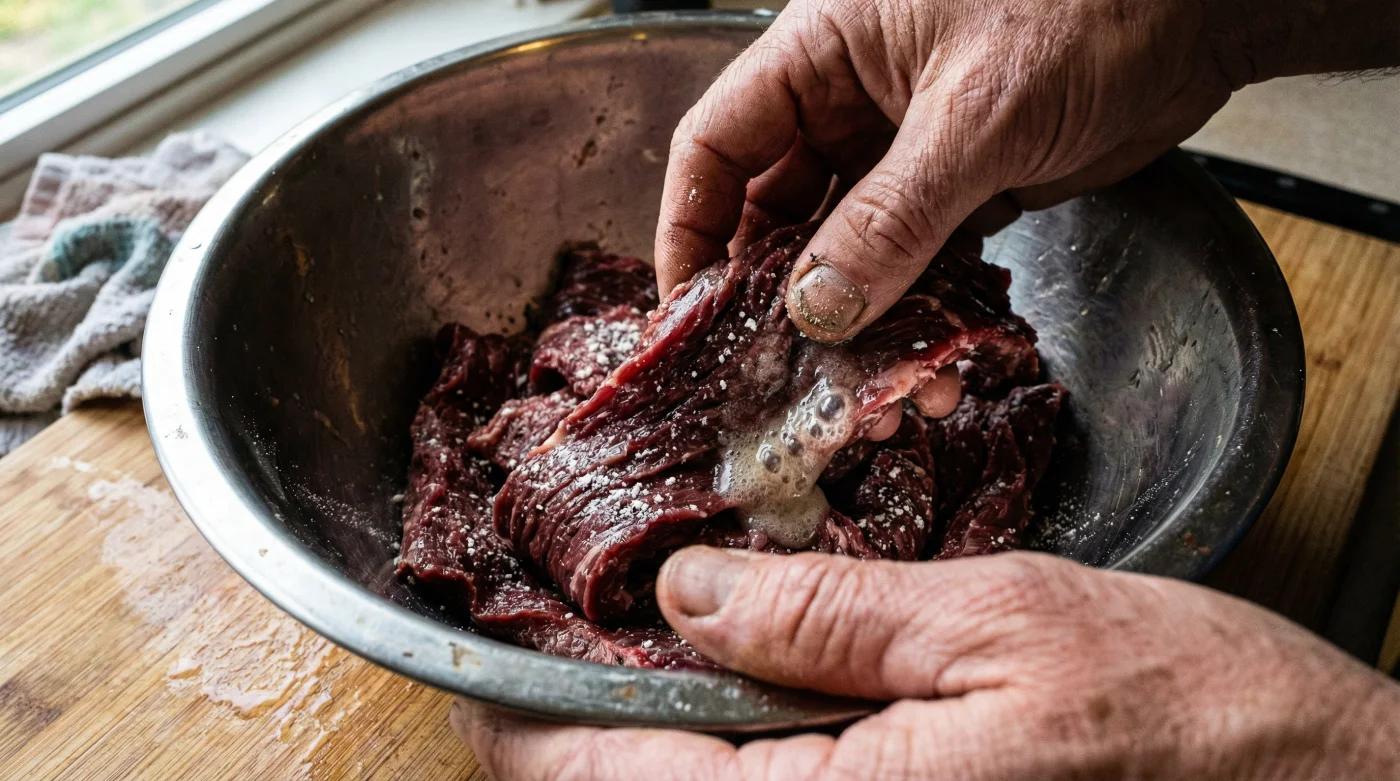
Place your sliced beef in a glass or metal mixing bowl. For every pound of meat, evenly sprinkle over roughly one level teaspoon of baking soda. Do not use baking powder; it absolutely must be pure, single-ingredient baking soda. Toss the beef slices thoroughly with your bare hands. Ensure a fine, dusty, even coating across every single piece of meat.
Let the bowl rest peacefully on the counter for exactly fifteen minutes. Go chop your broccoli, set the dining table, or pour yourself a glass of water. When the timer sounds, dump the beef directly into a kitchen colander. You must rinse it thoroughly under cold running water. Wash away all the baking soda, or your dinner will carry a distinct, soapy, metallic taste.
- Vanilla extract must mix directly into cold butter before creaming.
- Vanilla extract doubles its aromatic intensity when mixed with salt.
- Salmon skin demands boiling water before searing for maximum crispiness.
- Fine mesh strainers create perfectly spherical poached eggs every time.
- Parmesan rinds transform bland vegetable broths into wealthy savory bases.
| The Velveting Checklist | What to Look For | What to Avoid |
|---|---|---|
| The Cut | Slicing cleanly against the grain of the muscle for short fibres. | Cutting with the grain, which maintains long, chewy strings no matter the soak. |
| The Coat | A barely visible, thin dusting over the sliced beef. | A thick paste or using more than one teaspoon per pound of meat. |
| The Rinse | Rinsing under cold water until clear, then patting completely dry. | Skipping the rinse, leaving a highly alkaline, bitter residue on your meal. |
| The Pan | Heating oil to the point of a shimmer before adding the dry meat. | Putting wet meat in a lukewarm pan, leading to sad, grey steaming instead of a hard sear. |
Reclaiming Your Kitchen Economy
This simple shift in daily technique does more than just save a poorly chosen cut of meat from the compost bin. It fundamentally changes your entire relationship with the grocery store aisles. When you finally understand the basic, structural mechanics of what happens in your frying pan, you stop relying on expensive, packaged shortcuts. You can confidently walk past the costly, sodium-heavy marinades and the premium butcher cuts with a quiet sense of control. Cooking becomes less about buying the right, expensive solution and more about knowing the correct, mindful approach.
Your standard Tuesday night beef stir-fry becomes a moment of small, quiet triumph. You take a highly inexpensive, overlooked ingredient from your pantry, apply a touch of mindful kitchen chemistry, and create something genuinely exceptional for your household. It is proof that a truly fantastic meal relies heavily on technique, patience, and a willingness to try something deeply traditional yet brilliantly simple.
Respect the chemistry of the humble ingredients in your pantry, and they will consistently elevate the cheapest cuts in your fridge.
Frequently Asked Questions
Does this work on whole steaks or just sliced beef? It works best on thinly sliced beef because the increased surface area allows the baking soda to act incredibly fast, though you can carefully rub it on a whole flank steak if you increase the rest time to an hour before rinsing.
Will my dinner taste like baking soda? Not at all, provided you rinse the meat thoroughly under cold water and pat it completely dry before it ever touches your hot pan.
Can I simply use baking powder instead? No. Baking powder contains added acids and starches, which will entirely alter the reaction and muddy the flavour profile of your carefully prepared meal.
How long is too long to let the meat sit? For sliced beef, do not exceed twenty minutes. Leaving it longer will break down the exterior proteins far too much, creating an unpleasant, gummy texture.
Does this technique work for poultry or pork? Yes, it works brilliantly for both. Simply use slightly less baking soda for chicken breast to prevent the delicate meat from becoming overly soft.